Two Egyptian gilt cartonnage goddesses Ptolemaic Period, circa 332 - 30 BC
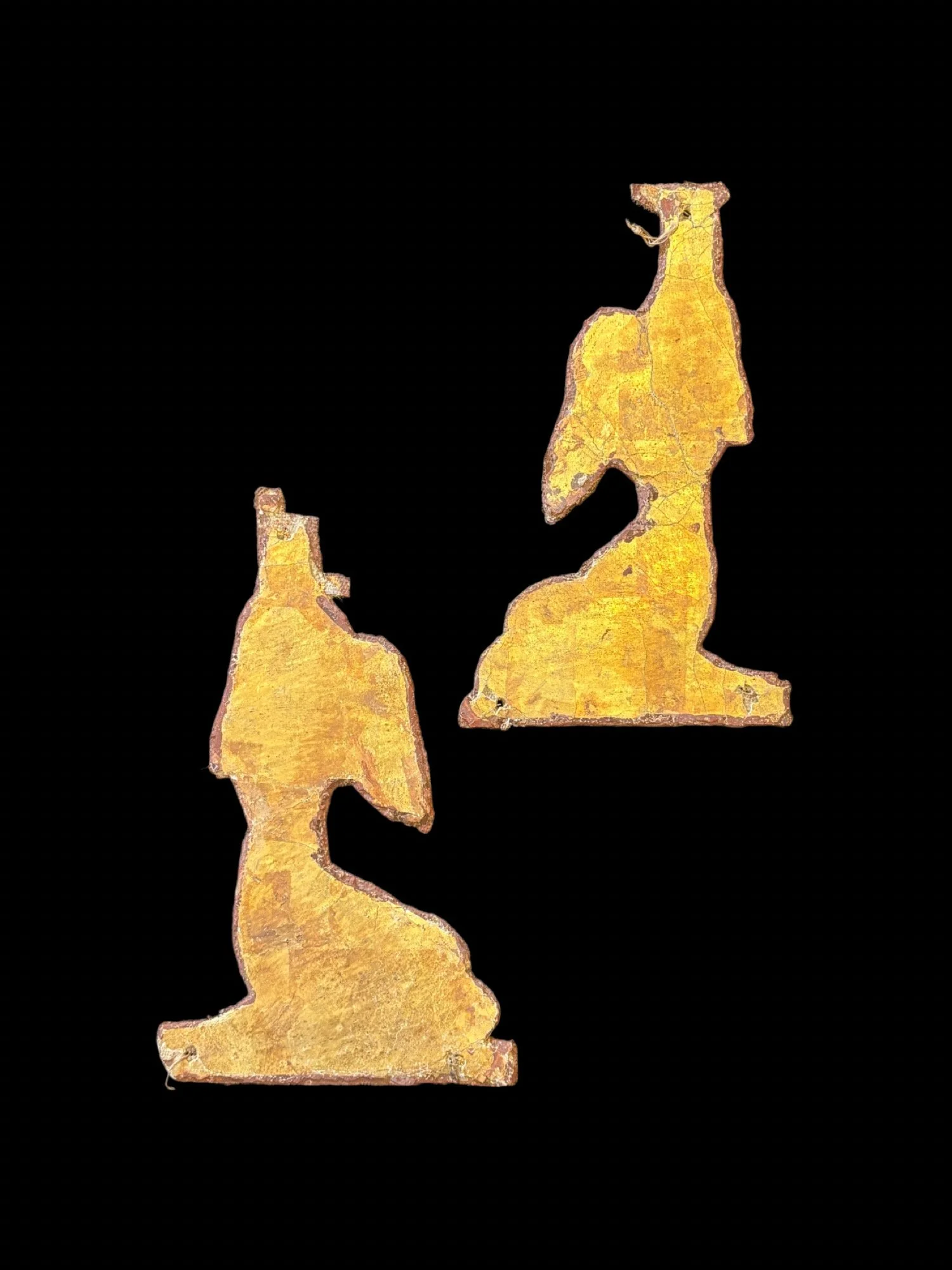
Two gilded cartonnage funerary figures depicting the goddesses Nephthys and Isis, portrayed kneeling and in a mourning posture. Each has the hieroglyph of their name on their head. Set in a fabric mounted frame for hanging.
Ptolemaic mummies were typically ornamented with a helmet-style mask, a boot for the feet, and several panels along the body that were fastened to the shroud (such as these figures). The goddesses would have originally been part of an openwork panel composed of a number of deities, that would have been placed over the body of the deceased at their burial, to ensure a good experience in the afterlife. Cartonnage is formed from linen made stiff with glue, then covered with a thin layer of gold (gilding) and paint. The Egyptians believed that using gold on mummies could help the deceased achieve eternal life.
For an example of the use of cartonnage for mummy trappings during the Ptolemaic Period, cf. S. D'Auria et al, Mummies and Magic, Boston, 1988, p.193, pl.140.
£ 800.00
Height: 14.2 cm approx each figure; framed: 35.5 x 26 cm
Provenance: UK private collection, Cornwall, acquired from Parthenon Gallery, London, in the early 2000s