A Greek silver tetrobol of Athena set in a modern gold swivel ring, Classical Greek, Mysia, circa 4th - 3rd century BC
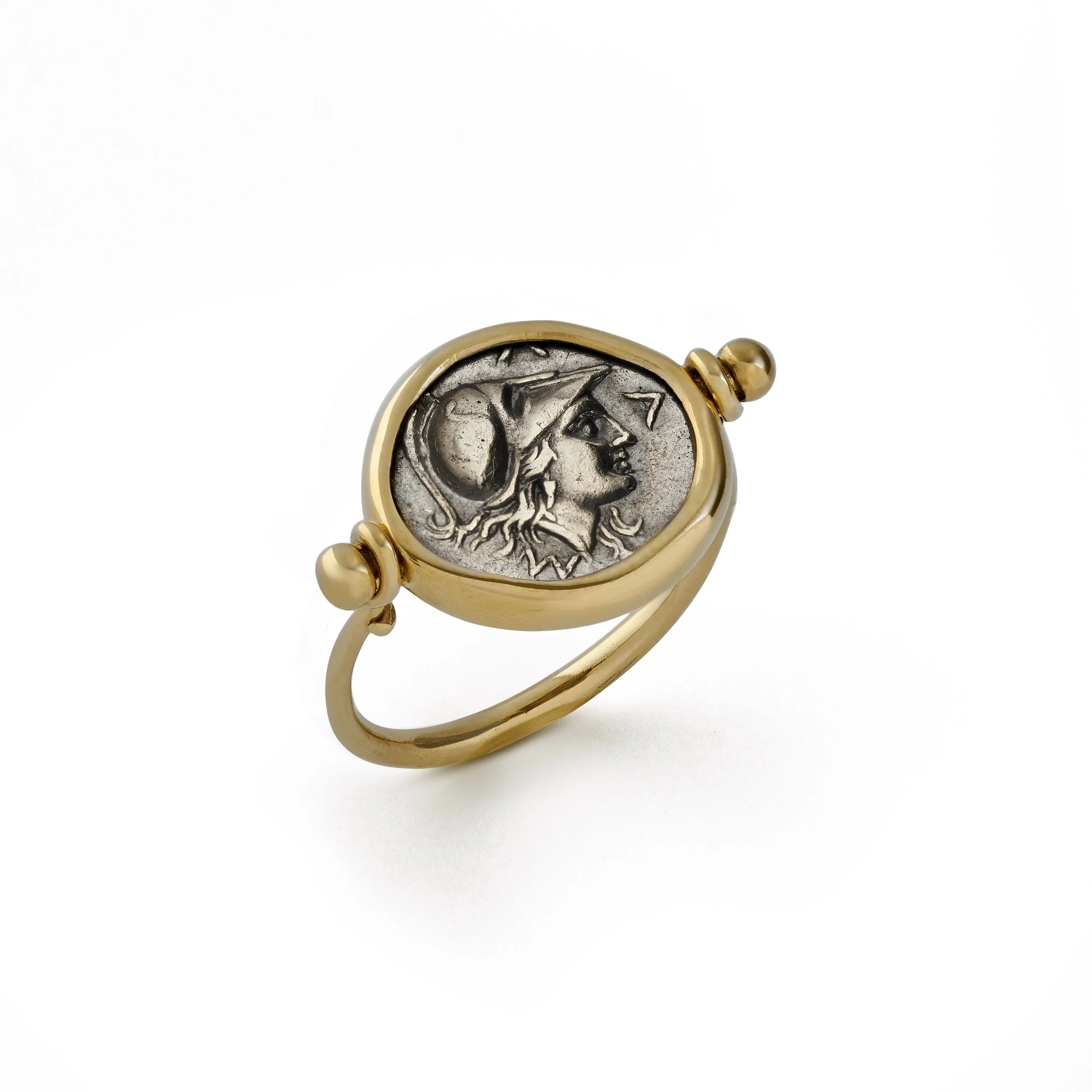
Diameter of coin: 1.45 cm
Weight of coin: 2.36 g
Ring size UK: M
Provenance: Classical Numismatic Group, Inc, 10 February 2021
An 18 carat gold swivel ring set with an ancient silver tetrobol of Mysia, Lampsakos.
The coin depicts on one side janiform female heads, each wearing a stephanos with a central earring. The reverse shows the helmeted head of the goddess Athena.
Mysia, in the north-west of Anatolia, had a rich history and was first mentioned in the epic poetry of Homer. According to myth, the Greeks first landed at Mysia, mistaking it for Troy. It was there that Achilles wounded their king, Telephus.
The use of coins as a form of money was invented in western Asia Minor in the early 7th century BCE. Made of gold, silver, bronze, and electrum (a gold-silver alloy), coins were literally worth their weight, but their value varied according to the percentage of their precious metal content.
The place of origin of a coin can be identified by its imagery. Many of these images referred to myths that were associated with the history of the community and thus were well known to the populace from religious ceremonies and theatrical entertainment. The story of a city’s founding, a local hero, the city’s guardian deity, and even the reason for the city’s wealth were subjects for a coin’s insignia.
The emblems chosen to represent an ancient city often related to its patron god or goddess. For instance, the deity might be associated with a new community’s origins or involved in a notable story connected to the city.
Baldwin, Lampsakos, Group B, Type II, 28–32; SNG BN 1177–8.