A Greek silver hemidrachm with Medusa set in a modern gold pendant, Classical Greek, circa 400 - 350 BC
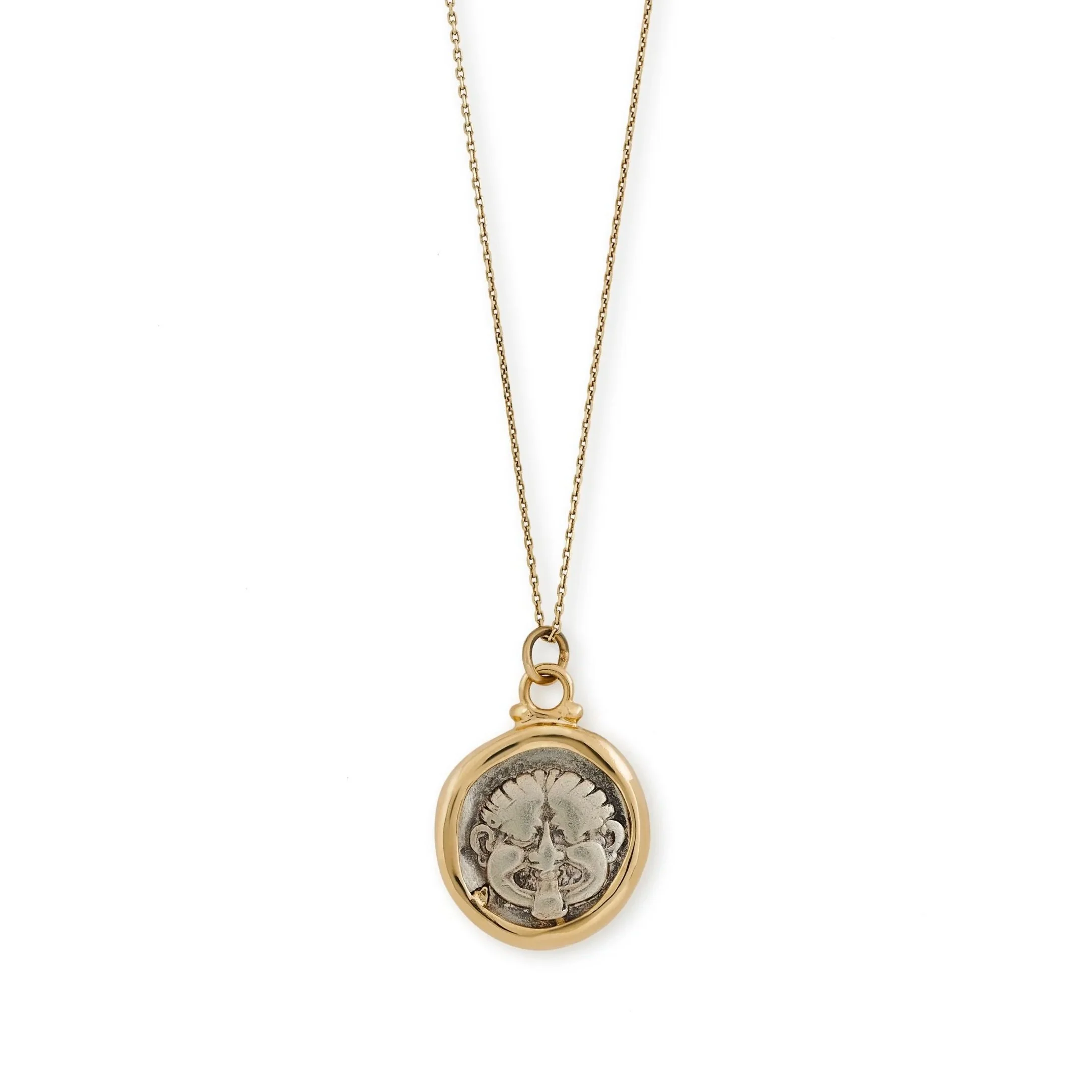
Width of pendant: 1.2 cm
Weight of coin: 1.77 g
Provenance: The Reverend Richard J. Plant (1928-2020) Collection, Bawtry, South Yorkshire
An ancient silver hemidrachm of Campania, Neapolis set in a modern 18 carat gold pendant.
The coin depicts an imposing facing head of a Gorgon, with a diademed head of nymph facing to the right on the reverse.
One of the earliest apotropaic devices in Ancient Greece, was the Gorgoneion, an amulet that depicted the head of a Gorgon. Because of their powerful and legendary gaze that could turn one into stone, images of Gorgons were used as objects for protection.
The term Gorgoneion generally refers to the head of Medusa. According to ancient Greek myth the Greek hero Perseus defeated the snake haired Medusa and used her severed head to turn his enemies into stone. Perseus then offered her head to the goddess Athena who used it as an emblem of power and protection.
The Gorgoneion was a prolific symbol in the ancient world and appears not just on coinage, but also architecture, vase painting and sculpture. One of the earliest, and perhaps the most spectacular example in Classical sculpture, is from the Temple of Artemis on Corfu, where a terrifying image of the Gorgon is depicted flanked by two leopards.